PhD Thesis Plagiarism in India: Understanding UGC Regulations and Their Impact on Research Scholars
The quality of research plays a crucial role in strengthening India's academic ecosystem. However, one of the biggest challenges faced by universities and research institutions is plagiarism. To preserve academic integrity and ensure originality in research, the University Grants Commission (UGC) has implemented strict anti-plagiarism regulations.
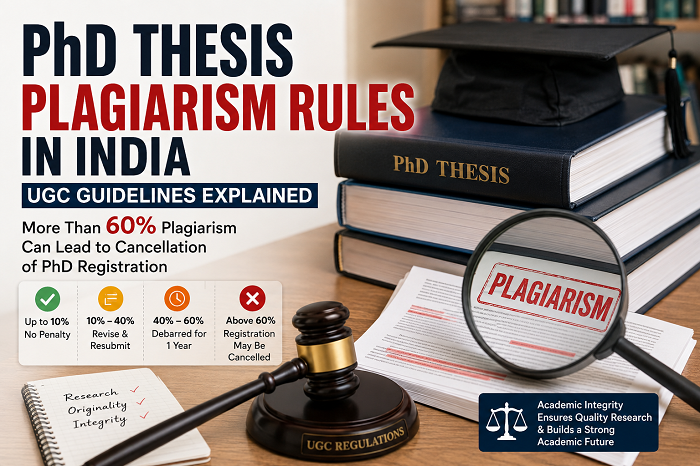
Recent discussions in academic circles have once again highlighted the seriousness of these rules. According to UGC regulations, if plagiarism in a PhD thesis exceeds 60%, a scholar's registration may be cancelled. This provision serves as a strong deterrent against unethical research practices and emphasizes the importance of original scholarly work.
This article explains the UGC plagiarism framework, penalties, implications for research scholars, and practical steps to avoid plagiarism in a PhD thesis writing.
What Is Plagiarism in Academic Research?
Plagiarism refers to presenting another person's ideas, words, research findings, data, or intellectual work as one's own without proper acknowledgment.
In academic research, plagiarism can occur in several forms:
- Copying text without citation
- Using someone else's ideas without attribution
- Improper paraphrasing
- Reusing published work without disclosure
- Self-plagiarism
- Copying data, charts, tables, or research findings
Universities consider plagiarism a serious academic offense because it undermines the credibility of research and affects the integrity of higher education.
Why Has UGC Taken a Strict Stand on Plagiarism?
Over the years, Indian universities witnessed a growing number of plagiarism-related complaints involving research papers, dissertations, and doctoral theses.
To address this issue, the UGC introduced structured anti-plagiarism regulations that classify violations according to the percentage of similarity detected in a research document. The objective is not only to punish misconduct but also to encourage researchers to produce genuine and innovative work.
The regulations apply to:
- PhD theses
- M.Phil dissertations
- Research publications
- Academic papers
- Institutional research outputs
UGC Plagiarism Levels and Penalties
UGC has established different levels of plagiarism based on the percentage of similarity found in a submitted document.
Level 0: Up to 10% Similarity
When similarity is less than or equal to 10%, it is generally considered minor overlap.
Penalty
- No major penalty
- Document may proceed for evaluation
This level usually includes unavoidable similarities, standard terminology, references, and common academic expressions.
Level 1: 10% to 40% Similarity
This category indicates moderate plagiarism concerns.
Penalty
- Student must revise and resubmit the thesis.
- Revision period can extend up to six months.
The scholar is expected to correct all problematic sections and submit a revised version for further evaluation.
Level 2: 40% to 60% Similarity
This level represents serious academic misconduct.
Penalty
- Scholar is debarred from submitting a revised thesis for one year.
- The PhD timeline gets significantly delayed.
A one-year delay can affect career plans, fellowship opportunities, academic appointments, and future research prospects.
Level 3: Above 60% Similarity
This is considered a severe violation of academic integrity.
Penalty
- PhD registration may be cancelled.
- Scholar loses eligibility under that registration.
- Universities may initiate further disciplinary proceedings.
For a research scholar who has spent several years working on a doctoral program, this can be a devastating outcome.
What Happens If Plagiarism Is Found After the Degree Is Awarded?
Many researchers assume that once a PhD degree is awarded, the issue is closed forever. However, UGC regulations allow institutions to take action even if plagiarism is discovered later.
Possible consequences include:
- Investigation by academic integrity committees
- Degree placed under review
- Temporary suspension of recognition
- Potential revocation of the degree in severe cases
Therefore, originality remains important throughout a researcher's academic career.
Understanding Similarity Reports
Many scholars misunderstand similarity percentages.
A similarity score does not automatically mean plagiarism. Plagiarism evaluation requires human assessment.
For example, the following are often excluded or treated differently:
- References
- Bibliography
- Table of contents
- Standard formulas
- Common terminology
- Properly quoted content with citations
Universities usually review similarity reports carefully before imposing penalties.
Common Causes of High Similarity in PhD Theses
Several factors contribute to plagiarism issues among research scholars.
- Poor Paraphrasing
Many students simply replace a few words while retaining the original structure of a source.
- Inadequate Citation
Failure to cite sources correctly often leads to plagiarism findings.
- Copy-Paste Literature Reviews
Researchers sometimes copy literature review sections from previously published studies.
- Self-Plagiarism
Reusing one's own published work without proper disclosure can also violate academic guidelines.
- Lack of Awareness
Many first-time researchers are unfamiliar with academic writing standards and citation practices.
How Universities Detect Plagiarism
Modern universities use advanced plagiarism detection software to screen research documents before submission.
Popular tools include:
- Turnitin
- DrillBit
- Other institutional plagiarism-checking platforms
These tools compare the thesis against:
- Published journal articles
- Online databases
- Academic repositories
- Previously submitted theses
- Internet sources
The generated similarity report helps institutions evaluate originality.
Best Practices to Avoid Plagiarism in a PhD Thesis
Conduct Original Research
The strongest protection against plagiarism is genuine and independent research.
Maintain Proper Notes
Always record source details while reviewing literature.
Use Accurate Citations
Follow citation styles such as:
- APA
- MLA
- Chicago
- Harvard
- IEEE
depending on university requirements.
Learn Effective Paraphrasing
Understand the concept first and then rewrite it in your own words while citing the source.
Check Similarity Before Submission
Running a plagiarism check before final submission helps identify problematic sections early.
Seek Expert Review
Academic mentors and supervisors can help identify areas that require revision before formal submission.
The Role of Research Supervisors
Supervisors play an essential role in ensuring ethical research practices.
They should:
- Guide students on academic writing
- Promote proper citation habits
- Review drafts regularly
- Encourage originality
- Educate scholars about UGC regulations
Research integrity is a shared responsibility between scholars and institutions.
Why Academic Integrity Matters More Than Ever
In today's digital era, information is easily accessible. While this makes research more convenient, it also increases the risk of unintentional plagiarism.
Academic integrity builds:
- Research credibility
- Professional reputation
- Trust among scholars
- Global recognition for institutions
A plagiarism-free thesis demonstrates a researcher's commitment to ethical scholarship and intellectual contribution.
Conclusion
UGC's anti-plagiarism regulations send a clear message: originality is non-negotiable in academic research. Scholars who exceed the permissible similarity limits face serious consequences, including delays, disciplinary actions, and even cancellation of PhD registration when plagiarism exceeds 60%.
For aspiring researchers, the focus should not merely be on reducing similarity percentages but on producing meaningful, authentic, and ethically sound research. By understanding plagiarism regulations, using proper citation practices, and conducting original investigations, scholars can successfully navigate the PhD journey while maintaining the highest standards of academic integrity.
Career Plan Academy encourages every research scholar to prioritize originality, ethical writing, and responsible research practices to build a successful academic and professional future.